Your Ad Here

Friday, May 2, 2008

Tweeze Your Brows

Tweeze Your Brows


Thin Tip: Good for grasping small, fine hairs, and plucking ingrown hair.

Slanted Tip: Gives maximum control.

Square Tip: Best used for removing coarse hairs or several hairs at a time.

1. Tweeze immediately after showering or apply a hot washcloth to loosen hair follicles.

2.Hold a pencil vertically along the side of the nose. Eyebrow should start at outside edge if pencil
Hint: Leaving a bit more space will widen close-set eyes.

3.Hold pencil to outside of eye. This is where the eyebrow of a bombshell ( Looking for a new sizzling look? Take a cue from modern-day pinup gal Dita Von Teese and go retro! Her long, luscious lashes, rich red lips, racy scarlet nails, and fresh skin are reminiscent of It girls from yesteryear, like Marilyn Monroe, Dorothy Dandridge, and Elizabeth Taylor. Keep these items in your boudoir and you’ll be all set.—India-Jewel Jackson) should end.

4.Smooth brows with a little moisturizer to help hairs slide out.

5.Brush brows up to find a natural arch.

6. Draw in the desired shape beforehand with a soft eye shadow pencil.
Hint: Don't use an eyeliner pencil. It will cause you to pluck too much.

7.Tweeze under the brow first, plucking in the direction of the growth.
Hint: If your plucking becomes too painful, apply a little anbesol (yes, that pain reliever for teeth also numbs the brows)

8.Using an eyelash comb, comb brows upwards and trim any hairs that extend beyond the natural top or brow bone.

9.After tweezing, soothe the area with cool, wet tea bags.

Eyebrow Waxing

Eyebrow Waxing


Unless you have very sensitive skin, waxing is a quick and relatively easy alternative to plucking your eyebrows. Although it is generally best to get eyebrows waxed professionally it can be expensive - up to around $15 as a general rule, although salons do differ. If you have a tighter budget, or if you are feeling fairly brave, here are some simple steps for you to try at home...

1) Preparing the Eyebrow

Brush the eyebrow into place with a baby toothbrush or clean mascara wand, so that their natural shape is neatly defined. Next, apply an astringent such as witch hazel to anesthetize the sensitive skin under the brow. Work out your natural brow shape by standing several feet away from a mirror, and following these simple steps…

Working out the length of the eyebrow

Hold a ruler parallel to your nose, and level with the inner corner of the eye, to work out where the brow should begin. If your eyes are close together, make the gap between the brows wider. If your eyes are far apart, don’t wax the start line of the brow too much so that they are closer together. Mark the correct point with a dot.

Working out the curve of the eyebrow

You can work out where the highest point of the curve/ arch should be by holding a ruler from the edge of the nostril past the outer edge of the iris (the colored part of the eye) and up to the eyebrow. Mark the spot with a dot.

Final planning

Now link up the dots in a gentle arch to draw on the ideal shape of the eyebrow that you want to achieve. This will give you a guideline to go by when applying the wax. You should aim for a smooth arched brow that tapers slightly at the outer ends.

2) Applying the Wax

Buy a professional waxing kit - basically a jar or tub of wax which can be warmed up in boiling water and applied with a small applicator or spatula, and (usually muslin) removal strips. Each product varies slightly, so be sure to read the manufacturers directions carefully.

Warm up the wax to optimum temperature and use the small spatula to apply a thin layer of wax to the growth. Make sure that you only use a small amount of wax on the spatula to avoid the wax dripping when it is applied. Apply wax with the hair growth under the eyebrow, (i.e. in the same direction that the hair grows in). You don’t need to use much, and you should not let the wax dry.

3) Removing the Hair

This is the painful bit! Ouch!!

Never wax above the eyebrow, only ever shape from below. Waxing from under the brow will widen your eyes and help to get the line even. This will make you look younger and much more glamorous if done correctly! As soon as it is applied remove the wax against the hair growth, (i.e. in the opposite direction that the hair grows in). This is done by gently smoothing a piece of cotton muslin over the waxed area, pulling the skin taut with one hand, and pulling the muslin off with the other.

It is a good idea to take a little hair off at a time, especially if you have fairly this growth. You will be surprised how much difference a little hair removal will make to your appearance.

4) The Aftermath

Any straggly hairs left over after waxing can be easily plucked out using a set of good tweezers. Apply a soothing balm like tea tree oil onto the area afterwards. You should avoid direct sunlight, acid based facial treatments, and liquid makeup for several hours.

To give the gorgeous new eyebrow shape emphasis, use an eyebrow pencil or tinted brow shadow to subtly fill in any gaps, and even out the natural color tone. Don’t worry if you make mistakes, even if you have bald patches or empty spaces. Practice makes perfect, and anyway, the hair will have grown back before you know it!!

Beauty and Body Image in the Media

Beauty and Body Image in the Media

Images of female bodies are everywhere. Women—and their body parts—sell everything from food to cars. Popular film and television actresses are becoming younger, taller and thinner. Some have even been known to faint on the set from lack of food. Women’s magazines are full of articles urging that if they can just lose those last twenty pounds, they’ll have it all—the perfect marriage, loving children, great sex, and a rewarding career.

Why are standards of beauty being imposed on women, the majority of whom are naturally larger and more mature than any of the models? The roots, some analysts say, are economic. By presenting an ideal difficult to achieve and maintain, the cosmetic and diet product industries are assured of growth and profits. And it’s no accident that youth is increasingly promoted, along with thinness, as an essential criterion of beauty. If not all women need to lose weight, for sure they’re all aging, says the Quebec Action Network for Women’s Health in its 2001 report Changements sociaux en faveur de la diversité des images corporelles. And, according to the industry, age is a disaster that needs to be dealt with.

The stakes are huge. On the one hand, women who are insecure about their bodies are more likely to buy beauty products, new clothes, and diet aids. It is estimated that the diet industry alone is worth $100 billion (U.S.) a year. On the other hand, research indicates that exposure to images of thin, young, air-brushed female bodies is linked to depression, loss of self-esteem and the development of unhealthy eating habits in women and girls.

The American research group Anorexia Nervosa & Related Eating Disorders, Inc. says that one out of every four college-aged women uses unhealthy methods of weight control—including fasting, skipping meals, excessive exercise, laxative abuse, and self-induced vomiting. And the Canadian Fitness and Lifestyle Research Institute warns that weight control measures are being taken by girls as young as nine. American statistics are similar. In 2003, Teen magazine reported that 35 per cent of girls 6 to 12 years old have been on at least one diet, and that 50 to 70 per cent of normal weight girls believe they are overweight.

Media activist Jean Kilbourne concludes that, "Women are sold to the diet industry by the magazines we read and the television programs we watch, almost all of which make us feel anxious about our weight."

Unattainable Beauty

Perhaps most disturbing is the fact that media images of female beauty are unattainable for all but a very small number of women. Researchers generating a computer model of a woman with Barbie-doll proportions, for example, found that her back would be too weak to support the weight of her upper body, and her body would be too narrow to contain more than half a liver and a few centimeters of bowel. A real woman built that way would suffer from chronic diarrhea and eventually die from malnutrition.

Still, the number of real life women and girls who seek a similarly underweight body is epidemic, and they can suffer equally devastating health consequences.

The Culture of Thinness

Researchers report that women’s magazines have ten and one-half times more ads and articles promoting weight loss than men’s magazines do, and over three-quarters of the covers of women’s magazines include at least one message about how to change a woman’s bodily appearance—by diet, exercise or cosmetic surgery.

Television and movies reinforce the importance of a thin body as a measure of a woman’s worth. Canadian researcher Gregory Fouts reports that over three-quarters of the female characters in TV situation comedies are underweight, and only one in twenty are above average in size. Heavier actresses tend to receive negative comments from male characters about their bodies ("How about wearing a sack?"), and 80 per cent of these negative comments are followed by canned audience laughter.

There have been efforts in the magazine industry to buck the trend. For several years the Quebec magazine Coup de Pouce has consistently included full-sized women in their fashion pages and Châtelaine has pledged not to touch up photos and not to include models less than 25 years of age.

However, advertising rules the marketplace and in advertising thin is "in." Twenty years ago, the average model weighed 8 per cent less than the average woman—but today’s models weigh 23 per cent less. Advertisers believe that thin models sell products. When the Australian magazine New Woman recently included a picture of a heavy-set model on its cover, it received a truckload of letters from grateful readers praising the move. But its advertisers complained and the magazine returned to featuring bone-thin models. Advertising Age International concluded that the incident "made clear the influence wielded by advertisers who remain convinced that only thin models spur the sales of beauty products."

Self-Improvement or Self-Destruction?

The barrage of messages about thinness, dieting and beauty tells "ordinary" women that they are always in need of adjustment—and that the female body is an object to be perfected.

Jean Kilbourne argues that the overwhelming presence of media images of painfully thin women means that real women’s bodies have become invisible in the mass media. The real tragedy, Kilbourne concludes, is that many women internalize these stereotypes, and judge themselves by the beauty industry's standards. Women learn to compare themselves to other women, and to compete with them for male attention. This focus on beauty and desirability "effectively destroys any awareness and action that might help to change that climate."

Meringue Mushrooms

Meringue Mushrooms


INGREDIENTS

  • 1/2 cup egg whites
  • 1/4 teaspoon cream of tartar
  • 1/4 teaspoon salt
  • 1 teaspoon vanilla extract
  • 1 cup white sugar
  • 1 tablespoon unsweetened cocoa powder
  • 4 ounces chocolate confectioners' coating

DIRECTIONS

  1. Preheat the oven to 225 degrees F (110 degrees C). Line 2 cookie sheets with parchment paper or aluminum foil.
  2. In a large glass or metal bowl, use an electric mixer to whip egg whites until foamy. Add cream of tartar, salt, and vanilla. Continue whipping until the whites hold soft peaks. Gradually sprinkle in the sugar so that it does not sink to the bottom, and continue whipping until the mixture holds stiff shiny peaks.
  3. Place a round tip into a pastry bag, and fill the bag half way with the meringue. To pipe the mushroom caps, squeeze out round mounds of meringue onto one of the prepared cookie sheets. Pull the bag off to the side to avoid making peaks on the top. For the stems, press out a tiny bit of meringue onto the other sheet, then pull the bag straight up. They should resemble candy kisses. Do not worry about making all of the pieces exactly the same. The mushrooms will look more natural if the pieces are different sizes. Dust the mushroom caps lightly with cocoa using a small sifter or strainer.
  4. Bake for 1 hour in the preheated oven, or until the caps are dry enough to easily remove from the cookie sheets. Set aside to cool completely. Melt the coating chocolate in a metal bowl over simmering water, or in a glass bowl in the microwave, stirring occasionally until smooth.
  5. Poke a small hole in the bottom of a mushroom cap. Spread chocolate over the bottom of the cap. Dip the tip of a stem in chocolate, and press lightly into the hole. When the chocolate sets, they will hold together. Repeat with remaining pieces. Store at room temperature in a dry place or tin.

Banana Muffins with a Crunch

Banana Muffins with a Crunch


INGREDIENTS

  • 3 cups all-purpose flour
  • 2 cups white sugar
  • 2 teaspoons baking powder
  • 1 teaspoon baking soda
  • 1 teaspoon salt
  • 2 eggs, lightly beaten
  • 3/4 cup milk
  • 2 teaspoons vanilla extract
  • 1 cup melted butter, cooled
  • 2 bananas, mashed
  • 1 banana, chopped
  • 1 cup granola
  • 1 cup chopped walnuts
  • 1 cup shredded coconut
  • 1/4 cup banana chips (optional)

DIRECTIONS

  1. Preheat oven to 350 degrees F (175 degrees C). Line 24 muffin cups with paper liners.
  2. In a bowl, mix the flour, sugar, baking powder, baking soda, and salt. Mix in the eggs, milk, vanilla, and butter. Fold in mashed bananas, chopped banana, granola, walnuts, and coconut. Scoop into the prepared muffin cups. Sprinkle with banana chips.
  3. Bake 25 minutes in the preheated oven, or until a knife inserted in the center of a muffin comes out clean.

Chocolate Strawberry Smoothie

Chocolate Strawberry Smoothie


INGREDIENTS

  • 2 bananas, frozen and chunked
  • 1/2 cup frozen strawberries
  • 2 tablespoons chocolate syrup
  • 1 cup plain yogurt

DIRECTIONS

  1. In a blender combine bananas, strawberries, chocolate syrup and yogurt. Blend until smooth.

Kiwi Strawberry Smoothie

Kiwi Strawberry Smoothie


INGREDIENTS

  • 1 banana
  • 6 strawberries
  • 1 kiwi
  • 1/2 cup vanilla frozen yogurt
  • 3/4 cup pineapple and orange juice blend

DIRECTIONS

  1. Place the banana, strawberries, kiwi, vanilla frozen yogurt, and pineapple and orange juice blend in a blender. Blend until smooth.

Smooth Strawberry Soup

Smooth Strawberry Soup


INGREDIENTS

  • 1 quart strawberries, halved
  • 2 cups apple juice
  • 1 cup sour cream
  • 1/2 cup packed brown sugar
  • 1/2 cup honey
  • 2 tablespoons lemon juice
  • 1 1/2 cups half-and-half cream
  • 3 tablespoons orange juice
  • CINNAMON-SUGAR CROUTONS:
  • 3 slices white bread, crusts removed and cubed
  • 2 tablespoons butter
  • 1/2 teaspoon sugar
  • 1/2 teaspoon ground cinnamon

DIRECTIONS

  1. In a bowl, combine the first six ingredients. Place half of the mixture at a time in a blender; cover and process until pureed. Transfer to a large bowl; stir in cream and orange juice, if desired. Cover and refrigerate for 2 hours.
  2. In a skillet over medium heat, saute bread cubes in butter until golden brown. Remove from the heat. Sprinkle with sugar and cinnamon; toss to coat. Cool. Stir soup before serving; garnish with croutons.

Cucumber Soup

Cucumber Soup


INGREDIENTS

  • 3 medium cucumbers
  • 3 cups chicken broth
  • 3 cups sour cream
  • 3 tablespoons cider vinegar
  • 2 teaspoons salt
  • 1 clove garlic, minced
  • TOPPINGS:
  • 2 medium tomatoes, chopped
  • 3/4 cup sliced almonds, toasted
  • 1/2 cup chopped green onions
  • 1/2 cup minced fresh parsley

DIRECTIONS

  1. Peel cucumbers; halve lengthwise and remove seeds. Cut into chunks. In a blender, cover and puree cucumbers and broth in small batches. Transfer to a large bowl; stir in the sour cream, vinegar, salt if desired and garlic until well blended. Cover and refrigerate for at least 4 hours. Stir before serving. Garnish with tomatoes, almonds, onions and parsley.

Nutritional Analysis: One 3/4-cup serving (prepared with reduced-sodium broth and fat-free sour cream and without salt) equals 95 calories, 3 g fat (trace saturated fat), 0 cholesterol, 239 mg sodium, 11 g carbohydrate, 1 g fiber, 5 g protein. Diabetic Exchanges: 1 reduced-fat milk.

Thursday, May 1, 2008

Flower Meanings and History

Flower Meanings & History

The charming and delicate beauty of flowers has fascinated people of all nations and backgrounds for centuries. Flowers have been bred and cultivated for their decorative beauty as well as their ability to heal diseases. Flowers are the subject of poems and myths, and religious symbols are associated with flowers as well. Many girls are named after flowers. The main reason for the popularity of flowers though is their ability to bring good cheer.

For all fellow lovers and admirers of flowers here is some background information about flowers we carry. This will help give your flower gift giving and buying a greater context.

Asters


There are over 600 species of asters, the most popular being the Monte Casino. Ancient societies believed that the odor of its leaves, when burnt, drove away serpents. While this might not be as applicable today, perhaps its connotation is still relevant: Giving asters means, "I am not sure whether you have been faithful to me". Be careful who you send asters to!

Meanings: charming, patience


Bells of Ireland


Although the name suggests these flowers come from Ireland, they originated in western Asia. Bells of Ireland have a spicy/peppery scent and are part of the mint family. They stand for good luck.

Meanings: good luck, whimsy

Carnations


Turn of the century dandies would not leave the house without a white or red carnation in the buttonhole of their suit. With the end of this tradition and the fact that carnations are so easily cultivated and grown, the flower has lost some of its popularity. However, carnations are not only beautiful and long lasting flowers, they also send a message: When you receive a red carnation bouquet, it means, "My heart aches for you" and when you receive white carnations the sender is saying: "I am still available."

Meanings: fascination, devoted Love

Chrysanthemum


Imagine, chrysanthemums have been cultivated in Chinese gardens for almost 3000 years! The name chrysanthemum comes from the Greek chrysos (gold) and anthos (flower). Today some of the meanings associated with this flower are: innocence, cheerfulness and loyal love.

Meanings: cheerfulness, innocence

Dahlias


The dahlia is the national flower of Mexico and this is also its birthplace. An old Aztec document states that the Aztecs used dahlias as a treatment for epilepsy. Only in the 19th century did the flower come to Europe where it was bred and cultivated into today's varieties.

Meanings: dignity, elegance

Iris


Did you know that there are so many different varieties of iris that they can be grown wild year round, in water and on land? Iris was most significant in history as the emblem of France -- Fleur-de-Lis -- established in the 11th century by the king of France. Today, it is the state flower of Tennessee and its meanings are faith, hope and wisdom.

Meanings: faith, hope, wisdom

Lilies


Lilies have been associated with many ancient myths. They are mentioned in the Old Testament, and in the New Testament, and symbolize chastity and virtue. Even today, lilies are associated with purity and faith.

Meanings: purity, faith

Peruvian lilies


Peruvian lilies or alstroemeria are named after the Swedish botanist Baron Klas von Alstroemer. He brought the flower seeds back from a trip to South America in the 18th century.

Meanings: friendship, devotion

Calla lilies


Calla lilies were first imported from South Africa to America in the mid-nineteenth century. The waxy white blooms and spearheaded leaves of the calla lily stand for radiant beauty and sophistication.

Meanings: sophistication, beauty

Lisianthus


Lisianthus may sound like a Latin name, but it is one of several common names associated with this plant. It is also referred to as Prairie Gentian, Prairie Rose or Texas Bluebell. The flowers existing today are derived from an American wildflower that is native to prairies ranging from Colorado to Nebraska and down to Texas.

Meanings: outgoing, thoughts

Orchids


During the 19th Century, orchids were widely collected. With nearly 25,000 varieties, some orchids are among the most exquisite and expensive flowers available. In antiquity, orchids were correlated with love and fertility. It was common knowledge that they would protect against diseases. Given as a gift they stand for preciousness and seduction.

Meanings: seduction, preciousness

Snapdragons


Snapdragons are an old decorative flower, widely used by the Romans. From its origin in southern Spain the cultivated form was spread throughout the whole Roman Empire. Nowadays remnants of this original population which all belong to the species Antirrhinum majus are found among Roman remains like temples in southern France, Malta, and Italy. The flower, also called "gracious lady" stands for deception.

Meanings: desire, strength

Roses


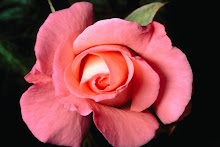
With their far-reaching popularity, roses are the queens of flowers. After buttercup, the roses are the second oldest variety of flowers on the planet. Biologists can trace roses back some 200 million years! Although there is a huge number of meanings and symbols associated with roses, the most common of course is love, which originated in Greek mythology. When Aphrodite cried about the death of her lover Adonis, she had red "Adonis Roses" grown with his blood, - thus red roses are the symbol of never-ending love. Important to mention are the roses' thorns, of which we all probably have some painful memory. Symbolically, love can be painful and full of suffering when not treated carefully.

Red roses: I love you, unconscious beauty

White roses: spiritual love, purity

Yellow roses: joy, gladness

Orange roses: fascinated, enthusiastic

Pink roses: grace, gentility

Tulips

http://www.beyondblossoms.com/images/flowers/tulip.gif


From Persia, tulips were introduced to Western Europe and the Netherlands in the 17th century. When growers started to hybridize the flower, they found ways of making it even more decorative. Hybrids of the flower were a scarcity at the time and a symbol of high status. Soon tulips became very popular as a trading product and bulbs were traded at the highest prices. The months of late 1636 to early 1637 would make history in the Netherlands as "Tulipmania". A bed of tulips was worth up to $5,000, the value of a small house in Amsterdam. The bulbs became currency, and their value was quoted at the stock market.

Meanings: perfect lover, fame

Sunflowers


Sunflowers turn their heads toward the sun and this how they got their common name. They originated in Central and South America. Sunflowers are not only pretty to look at but sunflower seeds are power-packed with healthy fats, protein, fiber, minerals, and vitamin E - all important to the nutritional quality of your diet. Wait! That doesn't mean you're supposed to eat the seeds out of your sunflower bouquet.

Meanings: adoration, sunshine


Sign up for PayPal and start accepting credit card payments instantly.